Társadalmi traumafeldolgozás és prevenció program
Magyarország most olyan pillanathoz érkezett, amikor lehetővé válhat, hogy az elmúlt bő évszázad egymásra rakódott traumái – Trianon, a két világháború, a holokauszt, a kitelepítések, a diktatúra, a rendszerváltás elszámolatlanságai, a NER évei – ne csöndben hassanak tovább, hanem nyíltan is szóba kerülhessenek a feldolgozás céljából. A feldolgozás elmaradása nem semleges állapot: a traumarétegek mint befagyott áramlatok tovább alakítják a társadalmi bizalmatlanságot, az apátiát, a sérelmi dinamikákat, a tanult tehetetlenséget, politikai értelemben vett sérülékenységhez és újabb traumatikus rétegek egymásra épüléséhez vezetve.
A nemzetközi tapasztalat azt mutatja, hogy az ilyen folyamatoknak több, egymást feltételező rétege van. Egyrészt a nyilvános, szimbolikus politikai megszólalás, vagyis annak belátása és kimondása, hogy a közös traumafeldolgozás elengedhetetlen (amely már részben meg is történt, illetve célként megfogalmazódott több interjúban és a Tisza programjában). Majd a politikai gesztusokat követi a megbeszélés, a közös nyelv megtalálása; és annak a kutatási, oktatási, civil, emlékezetpolitikai és digitális infrastruktúrának a kialakítása, amely a feldolgozást tartóssá, a prevenciót pedig hatékonnyá teszi. A mostani helyzet lehetőséget teremt arra, hogy a társadalmi traumafeldolgozásnak és prevenciónak Magyarországon először intézményes háttere legyen. Ennek a munkának a szakmai előkészítésében és koordinálásában szívesen részt vennék.
Részletesebben beszélek ezekről a kérdésekről a következő interjúkban:
Árad a Tisza, de mi lesz a levonulás után? Menyhért Anna a befagyott társadalmi traumákról.
Ónody-Molnár Dóra podcast interjúja. Jelen Hetilap YouTube csatorna, 2026. május 17.
Nagy Gergely interjúja Menyhért Annával a Qubit.hu-n: A traumatörténteket fájdalmas elmondani és meghallgatni is. 2026. május 25.
“Amíg nincsenek biztonságos helyzetek, addig nemigen jönnek elő az áldozatok történetei. Pedig nemcsak az elmúlt 16 évet kellene feldolgoznunk, hanem a sokkal régebbi, befagyott traumáinkat is. Ehhez állami felelősségvállalásra és társadalmi együttműködésre is szükség lesz – mondja a traumakutató.”
Az elmúlt 16 év politikai traumáinak feldolgozásáról, a traumapátiáról, és arról, mit jelenthet a traumatudatos demokrácia.
 Miért nem elég továbblépni?Produktív-e a traumafeldolgozás szempontjából a politikai színtereken zajló konfrontáció?Hogyan lehet a szembenézést, a jóvátételt és a bizalomvisszaépítést a megelőzés részévé tenni?Hogyan tanuljuk meg egymás traumáit meghallgatni?
A Tilos Rádió 3. utas című műsorában Tóth Szabi vendége voltam, 2026. július 6.
Spotify: https://open.spotify.com/episode/2UxV8v4glA3L3mY3rVvL5O
Apple Podcast: https://podcasts.apple.com/…/menyh%C3…/id1647717220…
Direkt link: https://archive.tilos.hu/…/tilos-20260701-100539-115926…
A NER olyan volt, mint egy bántalmazó kapcsolat. Cikk HVG -ben
A Facebook oldalamon várom a követőket /// Follow me on Facebook: https://www.facebook.com/anna.menyhert/
Trauma-Informed Democracy
A Social Trauma Processing and Prevention Programme
Hungary has arrived at a moment when it becomes possible for the layered traumas of the past century — Trianon, the two World Wars, the Holocaust, forced population exchanges, the dictatorship, the unfinished reckoning of 1989, the years of the NER — to be addressed openly rather than continuing to act in silence. The absence of processing is not a neutral state: the layers of trauma, as frozen currents, go on shaping social distrust, apathy, dynamics of grievance, learned helplessness – leading to political vulnerability and to the layering of new traumas on top of the older ones.
International experience shows that such processes have several mutually-conditioning layers. First, there is the public, symbolic political acknowledgment – the recognition and articulation that collective trauma processing is essential (which has, in part, already taken place, and has been named as a goal in several interviews and in the programme of the Tisza Party). Political gestures are then followed by dialogue and the search for a shared language; and by the building of the research, educational, civic, memory-political and digital infrastructure that makes processing sustainable and prevention effective. The present moment opens the possibility for social trauma processing and prevention in Hungary to have institutional support for the first time. I would be glad to take part in the professional preparation and coordination of this work. ©Anna Menyhért

“The Tisza is Flooding. Let it Overflow.”
This was the powerful slogan of the Tisza Party and its local communities, called Tisza Islands, during the pre-election months in Hungary.
People ask what this slogan means. It is intriguing. Flooding has a dangerous aspect. Yet reconstruction can follow.
Earlier I wrote about “frozen currents”, layers of unprocessed collective historical traumas that block progress. I can see a connection between frozen currents and the idea of the Tisza River flooding in the Hungarian collective imagination.
In his speeches, Péter Magyar draws on the revolutionary symbolism of 1848, the spirit of change, the momentum of the March youth. In contrast, the Orbán regime was attracted to the post-Trianon era, which deepened injuries and intensified frustration – Orbán’s rhetoric reinforced this.
The symbol of the Tisza is a perfect hit. Hungarians associate it with a poem by Sándor Petőfi, picturing the gentle Tisza River which suddenly breaks through the dams – the 1848 revolution. The words in the abbreviated name of the party, respect (tisztelet) and freedom (szabadság), are values that the traumatized Hungarian society really needs. In the film Spring Wind (its title evoking floods), Magyar recalls his surreal moment of realising that a party by this exact name existed, ready to be taken over. The flooding Tisza has an extremely strong political mobilization potential.
There are ever so many unprocessed collective traumas in Hungarian history: there was never time to process one before the next one arrived. World War I, Trianon, World War II, the Holocaust, forced population exchanges, communist dictatorship, the unfinished reckoning of 1989, the NER – layers of trauma from the last 100 years. Frozen currents. Something is moving deep down; the surface is frozen. It needs to thaw. Traumatic stories and the emotions associated with them are waiting to be resolved. They will not go away, not if we keep silent.
The digital era provides new tools for trauma processing, particularly in Central and Eastern Europe. New connections and networks are created on social media platforms, dissolving the silence surrounding traumas.
The victory of the Tisza Party is a story of social media; people were mobilized on these platforms in an unprecedented way. The flooding Tisza dissolved isolation and brought together the Tisza Islands in political imagination. But when the flood recedes, the river must be regulated and channelled; dams, boats, bridges and roads are needed so that the new system of connections stabilizes. Society strengthens, preventing new layers of trauma. Apathy and learned helplessness will not return.
Now collective trauma processing can begin. State responsibility, public discussions, cooperation, civic, research and educational projects – all of this will be needed.
This is what I will write about in this post series. To be continued.

Several people have asked me whether I will move back to Hungary now, after the elections. The question is being discussed in many social media groups, especially after the unprecedented number of Hungarians living abroad who travelled home to vote. What comes next? Some people are waiting. Some will not go; they are settled in their new country, their children are in school. Some would rather just watch from where they are for a while. Others are already packing. Yet others are waiting for programmes to invite them home, for concrete measures.
A friend of mine asked on Facebook whether her friends who had gone abroad are now coming home. It’s a disconcerting question. First, I had not realised that anyone was keeping track of who left. This is beautiful and painful. Second, time has passed. And for those who went abroad, it passed in a different space. Being elsewhere may not seem like much, but it is not the same as going abroad for a short time. It means that people lose touch with each other’s reality. Digital spaces, however, can connect emigrants with those who stayed, and digital communities themselves can take on the function of home – I have written about such digital homes earlier. Before the election in Hungary, social media became one of the main spaces of political mobilization. And now it has become the space in which the question of returning is being discussed. Could this also become the medium for the encounter of traumas?
The majority of Hungarians did not emigrate after joining the EU in 2004, as happened in other Central and Eastern European countries, but during the years of the NER (the System of National Cooperation, the name of Hungary’s political regime between 2010 and 2026). Hungarians traditionally have had strong ties to their home country. Everyone knows by heart the line from Mihály Vörösmarty’s 1836 poem Szózat – “It is here you must live, here you must die” – a poem that functions as a second national anthem, regularly sung at public celebrations. The line is embedded as a command in the collective mentality.
There is what is called migration trauma, or in milder cases, culture shock: the experience of losing the ground under one’s feet in a new country. Everything is new, the network is missing – my GP is not there, nor my hairdresser, I don’t speak the language in which I sign my contract with the electricity supplier or receive emails from my children’s school. In the best case, I have a job and will eventually have friends.
But Hungarian emigrants were not only affected by migration trauma. They had already arrived abroad carrying a previous, pre-migratory trauma – that is why they set out in the first place. Online expat and emigrant groups are usually created for practical mutual help: where to find what, how to deal with authorities. In contrast, Hungarian bloggers wrote in the mid-2010s that the main reason for their departure was that they could not breathe at home – there was no air left. The homeland had been taken away from them. There was no future, and no other choice but to move. Compared to blogs written by emigrants from other countries, who often described moving abroad as the end of a romantic relationship of equals, Hungarian bloggers portrayed a traumatic power relationship, from the perspective of a victim. They described their departure as an escape from abuse. Hungarians who left thus tried to distance themselves from their home-related trauma at the cost of culture shock. After culture shock, one gains a new perspective abroad. People keep in touch with their families. But this does not mean that the traumas brought from home have been processed – they have been set aside. They continue to work in silence, beneath the surface.
What happens, then, when someone returns now? Do these set-aside feelings re-surface, the grief, the sadness over how much time has passed? How does a returning person meet those who stayed? Reverse culture shock exists too: someone who has lived abroad for many years can find it difficult to adjust to the changed circumstances of the home country – made harder by the fact that one does not expect to feel out of place precisely there. Speaking the language helps, of course.
Yet those who stayed are not who they were either. They carry the traumas of living through the NER years – the effects of hopelessness, apathy, learned helplessness, of adaptation, turning away, or standing up in resistance and its failure, of internal emigration. A different kind of insecurity, a different kind of isolation, a different kind of vulnerability, a different kind of hopelessness – yet with many common elements, together forming the collective trauma of the past 16 years.
Cathy Caruth, one of the most important theorists of trauma, suggests that trauma may not only separate, but also link us: “as our ability to listen through the departures we have all taken from ourselves.” (1995) Such gestures of listening exist. The I Cannot Know selfie video, made nine years ago, is still online. Sixty-three Hungarians living abroad in 28 countries recited, each into their own camera, one line from Miklós Radnóti’s famous poem, about what a homeland means. I called it social poetry in my article on digital homes and migrant blogs: a new genre, a public, digital gesture of trauma processing.
A friend texted me too, “So are you moving home now?” “It’s complex,” I replied. To which she wrote, “Could there be a new role for you as a trauma expert? It’s becoming part of public discussion now that the traumas of the past 16 years should be addressed at an institutional level.”
Well, yes – that could be a good thing. So I have started writing this series of posts. This is the second.
#trauma #migration #diaspora #home #traumaprocessing
©Anna Menyhért
Trianonról
Társadalmi traumafeldolgozás III.
A félelem emlékezete – a sérülés képeinek peregrinációja
Trianon miatt kezdtem el azzal foglalkozni, hogy mi történik a történeti, kollektív traumákkal a digitális korban: hogyan terjednek és örökítődnek át az online felületeken, és hogyan használhatók a közösségi média csoportok a traumafeldolgozásra. Pontosabban, a fiam iskolai emléknapi élménye miatt.
A Nemzeti Összetartozás Napját, a Trianon-emléknapot 2010-ben iktatták törvénybe. 2011. június 4-én az akkor 8 éves fiam félelemmel telve jött haza az iskolából. Azt mesélte, véres kezek nagy darabokat téptek ki Magyarországból az okostáblán. Azt kérdezte, igaz-e, hogy Magyarország rengeteg embert elveszített, és a területének legnagyobb részét is. Azt is kérdezte, miért nem tudtuk itt tartani azokat az embereket – mi történt velük?
Szkítiát, nemzeti rockot néztek a gyerekek a YouTube-ról, emléknapi ünnepség gyanánt, aztán animációt, a véres kezekkel, és egy másikat, ahol más európai országok területe lett kisebb, mondván, mit szólnának, ha velük történt volna.
Néhányan kvázi-traumatizált állapotba kerültek – a trauma átadható ilyen módon, ha csak a félelmet, a sokkot, a kiszolgáltatottságot, a keserűséget érzékelik a gyerekek, értelmezési keret és feldolgozási javaslat nélkül.
A Trianon emlékezetéről szóló 2010. évi XLV. törvény pontos címe „A Nemzeti Összetartozás melletti tanúságtételről” – érdekes fogalomhasználat. A tanúságtétel, például a holokauszt tanúságtételek esetében, amikor túlélők osztják meg a történetüket, életben tartja a korábbi trauma emlékezetét, de ezzel együtt, optimális esetben, éppen az elbeszélés és kiállás révén, segíti a feldolgozást. Bírósági ügyekben a tanúvallomás a történtek tisztázását szolgálja.
De itt, szokatlan módon, a törvény maga a tanúságtétel, performatív tett, ami azonban a traumához való ragaszkodásként értelmezhető. A tanúságtétel itt nem a traumatikus eseményt foglalja történetbe – ennek gyógyító hatása lenne. Hanem a következményével kapcsolatos álláspontot rögzíti: azt, hogy a trianoni döntés a magyar nemzet legnagyobb tragédiája, és a határok átszabása ellenére a magyarok egy nemzetet alkotnak.
A feldolgozás lehetséges módjáról viszont nem beszél.
Erre adhat értelmezési keretet Vamik Volkan fogalma, a „választott trauma”: egy közösség identitásának meghatározó részévé válik egy feldolgozatlan történeti trauma, amely generációkon keresztül átörökítődik, és trigger-helyzetekben újra aktiválódik.
A befagyott áramlatok, a feldolgozatlan történeti traumák százéves sorozata az első világháborúval, a spanyolnátha-járvánnyal, és a trianoni békeszerződéssel kezdődik. Magyarország az első világháború után elvesztette területének és lakosságának kétharmadát, létrejöttek a kisebbségi magyar csoportok, amelyek nem használhatták anyanyelvüket hivatalos ügyekben és az oktatásban. Családokat választottak szét az új határok, és az elcsatolt területeken maradt a vasúti összeköttetés nagy része, jelentős bénulást okozva.
A trianoni traumát a sebzett, sérült, csonka, vérző test, a fantomfájdalom szimbolikája írta le a kezdetektől. Az 1920-as évek plakátjain kezek tépik szét az országot, vagy egy kés szúrja át a térképet. Ezt a sebet még az 1990-es években is gennyedőként, üszkösödőként jellemezték. Ma is aktív a „nemzettest” sérülésének traumahordozó képzete, és a korabeli és hasonló képek keringenek a közösségi médiában, sokszor eredeti jelentéstartományukban, de ironikusan is: egy Nagy-Magyarország alakú kenyérszelet, közepén mai Magyarország alakú pirospaprika-folttal (vérrel). Máskor ezek a peregrináló képek tetoválások formájában már az emberi testre íródnak, a bőrre kerülnek.

Az Orbán-rezsimet vonzotta a Trianon utáni korszak. Orbán polarizáló retorikája nyugtalanságot, ellenségeskedést és frusztrációt váltott ki, a társadalmat megosztotta. A NER így aktiválta ennek a traumának a maradványait.
A törvény preambuluma hangsúlyozza, hogy „szakít a sérelmi és tragikus hozzáállással”. De a törvény és az indokolása úgy fogalmaz, hogy Trianon „kitörölhetetlen, máig feldolgozatlan nyomot hagyott”; olyan tragédia, amelyre „mindörökké emlékezni” kell. A szövegben az látszik, hogy a határokon átívelő nemzeti összetartozásnak feltétele a közös sérelem és a közös áldozati narratíva. Ez az oka annak, hogy e felfogás számára a feldolgozás nem egyértelmű cél, mert azzal fenyeget, hogy feldolgozás után, az addig életben tartott közös sérelem nélkül, elveszhet, elfelejtődhet a közös múlt, és akkor, e szerint a kimondatlan logika szerint, megszűnhet az összetartozás is.
Ezzel függhet össze az is, hogy a közbeszédben, iskolai ünnepségeken, háttéranyagokban Trianont ma nagyon sokszor nemcsak feldolgozatlanként, hanem feldolgozhatatlanként említik. Ez lényeges különbség.
Magyar Péter elgyalogolt Nagyváradra a kampánya során, sokan elkísérték kisebb-nagyobb távokon. Ezt a gesztust két tekintetben is a társadalmi traumafeldolgozáshoz lehet kötni. Egyrészt, beszédében azt mondta, a „zarándokút üzenete”, hogy „hozzá kell kezdeni a sebek begyógyításához” – ez a trianoni seb-szimbolikára mint kimondott politikai gesztus felel. Másrészt ez a közösségi vándorlás nemcsak szimbolikus, hanem fárasztó, hosszú, testi tapasztalat. Testet adhat a sebzettség cirkuláló, peregrináló képzeteinek, fizikai módon köti meg a félelem átörökített emlékezetét.
Bécsben lakom. Hollandia után költöztünk oda. Jó volt, hogy sok ott a magyar. És azonnal éreztem, és az is jó volt, hogy ott mást jelent magyarnak lenni, mint Budapesten. Mindenhonnan költözünk magyarok Bécsbe, az anyaországi-határon túli kettősség megszűnik. A gyerekek pedig minimum három nyelvet beszélnek.
#Trianon #trauma #emlékezet
Társadalmi traumafeldolgozás IV.
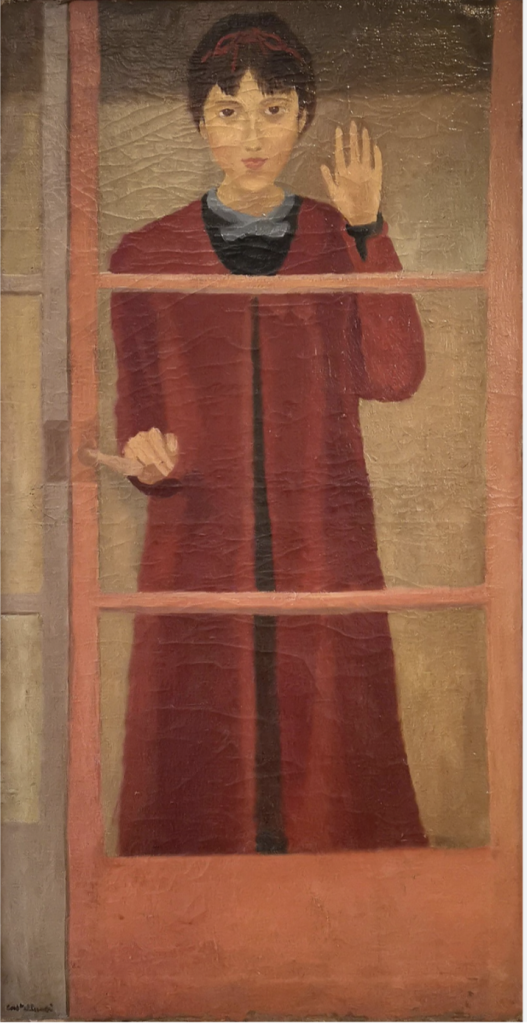
Turning away, withdrawing, or not acknowledging the pain of others is not necessarily indifference. It can also be a trauma response: freezing, learned helplessness, or an experience that still has no language – because listening to another person’s trauma is not easy.
In my research, I have worked on so-called bystanders, who are present, see what is happening, yet are unable or afraid to act. I argue that they too can be carriers of social trauma, and that their passivity may be one of its consequences.
For me, one of the key questions today is how to create safe spaces for storytelling, and the infrastructures needed for societies to become stronger and for us to be able to turn toward one another when something is wrong.
Gergely Nagy asked me about this in an interview for the popular science-cultural magazine Qubit. A traumatörténeteket fájdalmas elmondani és meghallgatni is. Qubit.hu, 2026. május 25.
#trauma #CollectiveTrauma #bystander #HistoricalTrauma #Hungary
©Anna Menyhért
Hókatasztrófa, 2013. március 14-15.
Társadalmi traumafeldolgozás és prevenció V.
Bántalmazó történet – emlékezet-átírás
Emlékszel a hókatasztrófára? 9000 autó akadt el a hóban, 14 000 emberrel, és 400 helyen törtek el a villanyvezetékek oszlopai, napokra áram nélkül maradtak egész települések. Osztrák hókotrók jöttek át segíteni, pedig nem kaptak instrukciókat a magyar katasztrófavédelemtől. Az állami rádió, tévé nemigen tájékoztatott az eseményekről, a segítségnyújtást sokezer civil kezdte el, közösségi médián, és három kis Győr környéki rádió szervezte. Volt, aki az M1-esen 24 órát is az autóban töltött, gyerekekkel. És civilek vágták át először a szalagkorlátot, hogy a beszorult autók vissza tudjanak fordulni. A Belügyminisztérium sms-éből mém lett: „Segítünk! Ne hagyja el a gépjárművét! Ha elfogy az üzemanyaga, üljön át másik gépjárműbe!”
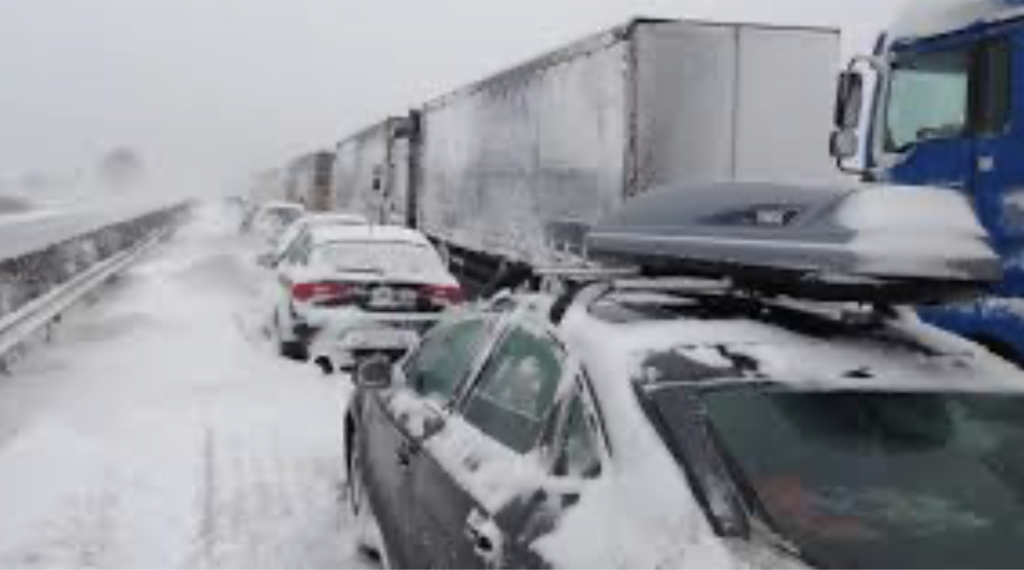
Ez volt az a pont, 2013-ban, amikor először igazán megijedtem. Veszélyes. Nem értenek hozzá. Mi lesz, ha komoly baj lesz? Ki segít majd?
Amikor most elkezdtem írni ezt a posztot, rákerestem az adatokra. És elbizonytalanodtam: rosszul emlékszem? Semleges hangú beszámolókat találtam, dokumentumfilmet mérnökkel, meteorológussal, sok hóval és érzelmes jelenetekkel; tízéves évfordulós ismertetőket.
Hová lettek az akkori közösségi média anyagok, a felháborodott cikkek, a mémek?
Találtam egy meteorológiai tanulmányt, amelyet végképp nem tudtam hova tenni. Először elemez, logikusan. Majd listát készít arról, mely tényezők felelősek a kritikus helyzet kialakulásáért.
Itt pedig – összerándultam, amikor olvastam – a lista első helyén az „emberek tájékozatlansága, felkészületlensége, felelőtlen döntései” állnak – azoké, akik szorongva az autójukban éjszakáztak. Az ő hibájuk.
Hogyan íródott át a közelmúlt története? Mi a helyzet azzal, hogy nem tájékoztatták az embereket azok, akiknek ez lett volna a dolga, mert a katasztrófavédelmi vezetők egy ünnepségen vettek részt? Hogy a sztrádára vezető felhajtók nem voltak sehol lezárva, így addig mentek fel az autók, amíg az M1 telítődött? Hogy a katonaságot csak másnap reggel hívták segíteni, pedig készenlétben álltak?
Tovább kerestem – csak előjöttek a korabeli kritikus hangú cikkek. Megtréfált az algoritmus a találatokkal. Szép nyugodt narratívát rakott össze az elkerülhetetlen ítéletidőről.
És aztán megtaláltam a forrást: Orbán Viktor, aki a havazás napján Brüsszelben járt, utóbb azt mondta a Kossuth rádióban: az embereknek kellett volna józan megfontolás alapján együttműködni a hatóságokkal, és nem felmenni a sztrádára. Vagyis, az embereket hibáztatta. Azokat, akik szorongva az autóban éjszakáztak.
Ez a keretezés a két évvel későbbi meteorológiai elemzésben már tényként köszönt vissza.
Néhány hónappal 2013 márciusa előtt értettem meg, milyen mélységig központosították a rendszert. Történt, hogy elnyertem egy kutatási projektet, amelyben a kutatócsoportom vásárolt – volna – két laptopot, amelyek azonban sehogy se érkeztek meg. Azt hittem, elakadtak a papírok az OTKÁ-nál vagy a minisztériumban. Telefonálni kezdtem, hogy megtaláljam az illetékest. Különböző hivatalokkal beszéltem, 5-6 szinten, több órán keresztül, míg eljutottam a Miniszterelnökség titkárságára, ahol is megtudtam, hogy az összes magyar kutatási projekt összes eszközbeszerzését egyszerre fogják majd valamikor aláírni. (Tényleg szóltak az egyetemi portáról sok hónappal később, hogy megjöttek a laptopok: ott álltak stócban a fal mellett. De mienkből az egyiket valaki más már elvitte. Vittem helyette egy nyomtatót meg egy tabletet. Közbeszerzés, közelosztás.)
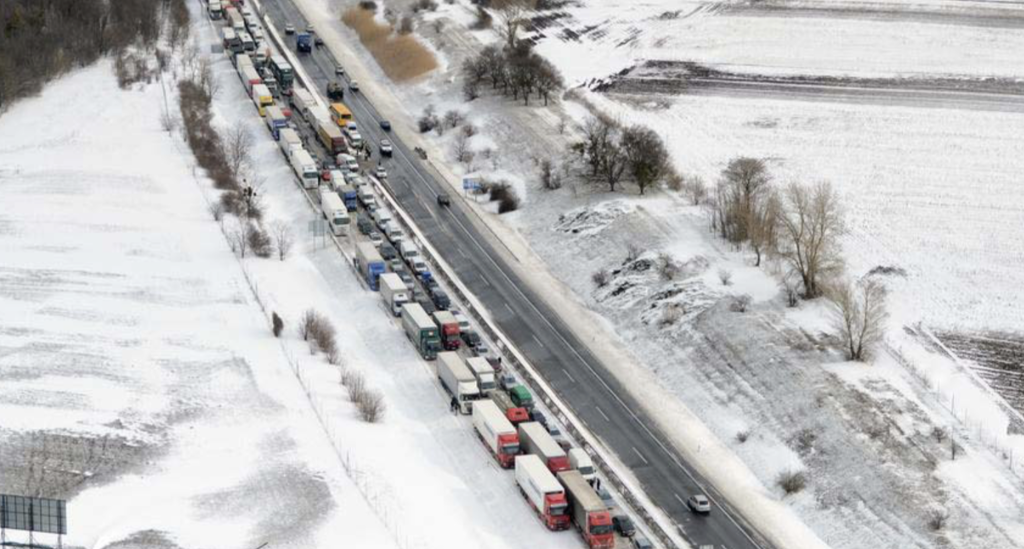
Az emberek 2013. március 14-én magukra maradtak a hóban. Már maga ez is bántalmazás, elhanyagolás. De ezt követően, az abúzusra jellemző módon, a rendszer őket állította be hibásként. Ezen a napon a rendszerben dolgozó vezetők felsőbb utasításra vártak, de az csak késve érkezett. A központosítás tehetetlenségi nyomatéka – katasztrófahelyzetben.
Az abúzus-dinamika később átkeretezte a történetet. Ami most a rendelkezésünkre áll, a bajbajutottakat hibáztatja. Az egymásnak aktívan segítő emberekről, civilekről és nem civilekről, hallgat. Az okokat nem tárja fel, a felelősöket nem nevezi meg. Az emberek többsége pedig, különösen a fiatalabbak, ezt a verziót fogadták el. A 14 000 engedetlen, felelőtlen autós történetét, akik felhajtottak a sztrádára.
Miért írok most erről? Két okból. Az egyik: a közelmúltat a történetek szintjén is vissza kell építeni. Kimondani, hogy mi történt. Azonosítani az ilyen mechanizmusokat. Az emlékezet-átírást és a bántalmazó keretezést társadalmi traumafeldolgozással feloldani.
A másik: a tanult tehetetlenség visszafordítható, az eredeti kutyás kísérletben is sikerült. De először gyakorolni kellett.
(Seligman 1967-es kísérletében a kutyák, ha túl sok áramütés érte őket, egy idő után már meg se próbáltak elmenekülni, akkor sem, ha már lehetett volna. De újra tudták tanulni.)
#trauma#NER#abuse#bántalmazás #TársadalmiTraumafeldolgozás#LearnedHelplessness
©Anna Menyhért
Snow Disaster, March 14-15, 2013, Hungary
Abusive Narrative Framing – Rewriting Memory
Social Trauma Processing and Prevention V.
In the 2013 Hungarian snow disaster 9,000 cars got stuck in the snow, with 14,000 people. Electricity poles were damaged in 400 places, leaving entire settlements without power for days. Austrian snowplows came to help, even though they had not received instructions from the Hungarian disaster management authorities. The state radio and TV did not provide much information about the events, the rescue effort was started by thousands of civilians, on social media, and organized by three small radio stations around Győr. Some people spent 24 hours in their cars on the M1 motorway, with children. And civilians were the first to cut through the crash barrier so that the stuck cars could turn back. The text message sent to mobile phones from the Ministry of the Interior became a meme: “We’re helping! Don’t leave your car! If you run out of fuel, get into another car!”
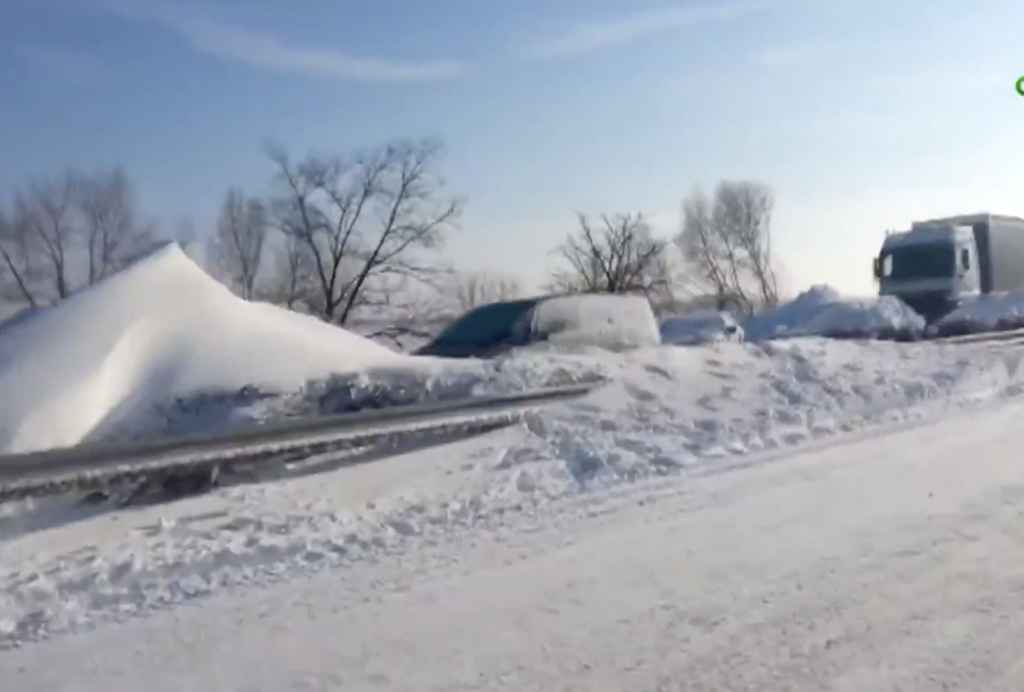
This was the point in 2013 when I first got really scared. It’s dangerous. They are not competent. They don’t know what they are doing. What if something serious happens? Who will help?
When I started writing this post, I searched for the details. And I became unsure: am I remembering wrong? I found neutral reports, a documentary with an engineer, a meteorologist, lots of snow and emotional scenes; ten-year anniversary reviews.
Where did the social media material from that time, the outraged articles, the memes go?
I found a meteorological study that I didn’t know what to make of. First, it analyzes the events logically. Then it lists the factors responsible for the development of the criticalsituation.
And here – I winced as I read – at the top of the list was “people’s ignorance, lack of preparedness, and irresponsible decisions” – of those who spent the night in their cars in fear. It’s their fault.
How has recent history been rewritten? What about the fact that those who should have been in charge didn’t inform people because the disaster management leaders were at a party following a ceremony? That none of the motorway entrances were closed, so cars kept driving onto the M1 until it was filled up? That the military wasn’t called in to help until the next morning, even though they were on standby?
I kept searching until I found the critical articles of the time. The algorithm tricked me at first, by putting together a nice calm story about the inevitability of the weather disaster.
And then I found the source: Viktor Orbán, who was in Brussels on the day of the snowfall, later said on Kossuth Radio, in his regular weekly interview: people should have cooperated with the authorities based on common sense and not gone onto the motorway. In other words, he blamed the people. Those who spent the night in their cars in fear.
Two years later this framing had already hardened into fact in the meteorological analysis.
It was a few months before March 2013 when I understood how deeply the system had been centralized. I had won a research project in which my research group bought – supposedly – two laptops, but they never arrived. I thought the paperwork was stuck at the research centre or at the ministry. I started making phone calls to find the person in charge. I spoke to various offices, at 5-6 levels, for several hours, until I reached the secretariat of the Prime Minister’s Office, where I learned that all equipment purchases for all Hungarian research projects would be approved together at some point. (And indeed, many months later someone called me from the university reception to say that the laptops had arrived: they were standing there in a pile by the wall. But someone else had already taken one of ours. I took a printer and a tablet instead. Public procurement, public distribution.)
On March 14, 2013, people were left alone in the snow. This in itself is a form of abuse, neglect. But then, in a way typical of abuse, the system marked them as the ones at fault. On that day, the managers working in the system were waiting for orders from higher up, but the orders came late. The inertia of centralization – in a disaster situation.
The dynamics of abuse later reframed the story of the snow disaster. The version we have now blames those who were in need of help. It is silent about people who actively helped each other: civilians, local firefighters, local communities, people who had tractors. It does not reveal the reasons; it does not name those responsible. And the majority of people, especially the younger ones, have accepted this version. The story of 14,000 disobedient, irresponsible drivers who drove onto the highway.
Why am I writing about this now? For two reasons. One: the recent past must also be reconstructed at the level of stories. To say what happened. To identify such mechanisms of abuse and blame. To undo the memory rewriting and abusive framing through social trauma processing.
The other: learned helplessness can be reversed, as the original dog experiment showed. But first it had to be practiced.
(In Seligman’s 1967 experiment, dogs, if they received too many electric shocks, after a while did not even try to escape, even if they could have. But they were able to relearn how to act.)
#trauma #Hungary #abuse #memory#SocialTraumaProcessing #LearnedHelplessness
©Anna Menyhért
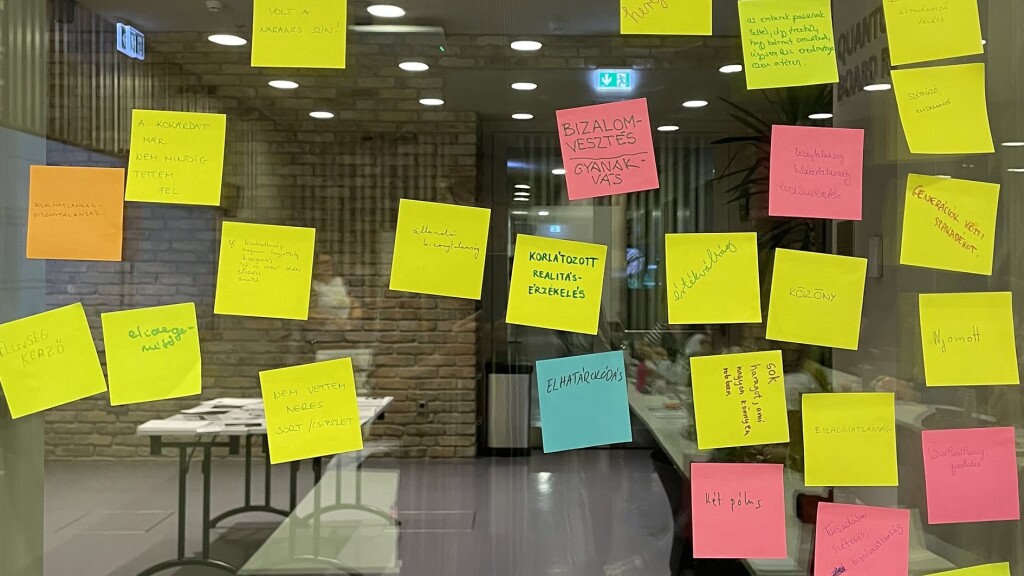
What mark have the past sixteen years left on the way Hungarian society functions?
They wrote down whatever came to mind, then put their notes aside. After the talk, we stuck them on the glass door.
I almost cried when I saw what they had written. I knew it might be like this. I have been talking and posting about it for months. But seeing it all together, the realisation that it is indeed like this, still hit me. The lack of trust came through most strongly. These young people were six when the Orbán-regime began. They grew up in it. Standing beside the notes, I felt a responsibility: this is what they inherited, and this is how they experience it. Those of us who understand collective mental processes, and who remember both the NER and the time before it – who remember what social trust feels like – need to do something. I am one of them.
Look at what they wrote on the notes in the photo; I put the full lis below: distrust, indifference, suspicion, isolation, helplessness, loneliness, anxiety, servility, resignation, alienation. It is all about relationships, the lack of connection, the damage to the fabric of society. A snapshot of collective traumatization.
The students asked a few questions too: What can we do? Will politicians and the government get behind efforts to process social trauma? What can we do about those who deny that this happened?
My answers: We need to tell as many people as possible what we know about these processes. That is why teaching trauma matter. People are creative. If they understand what has happened to them, they will find solutions that fit their own situations.
Different initiatives can begin in different places, strengthening one another. That is why I am not sure it would be good if politics directed this work. But we do need infrastructure to work effectively.
My ©Traumapathy programme proposal and the idea of trauma-conscious democracy are about informing communities and helping them heal in a multi-focused network of initiatives.
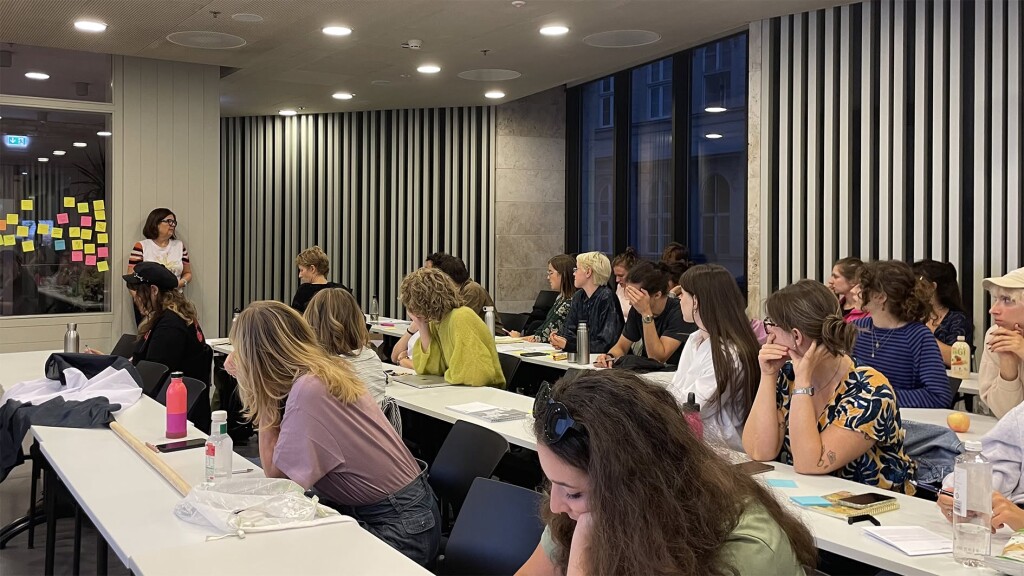
With collective trauma, relationships are damaged, and repair must also happen through relationships. Trust grows where people can do something together in a safe setting.Many thanks for the invitation, and to the students for taking part and for sharing with me and with each other what they think about the state of Hungarian society. One step towards trust.
The list: distrust (10x), loss of trust, indifference, disunity, alienation, a divide between generations, suspicion (2x), people turned against one another, social breakdown, uncertainty (2x), hopelessness, a crisis of values, a lot of anger that can easily erupt, two opposing poles, people became passive, feeling that whatever they did, it would make no difference, stirring people up, a limited sense of reality, distancing oneself, feeling abandoned, exploitation, the “good” side versus the “bad” side, no clear picture of the future, a feeling of helplessness, growing isolation, creating enemy images – growing fear, isolation, disconnection and separation, increasing loneliness, anxiety, apathy, exclusionary thinking, denial, servility, resignation, lack of empathy, difficulty connecting with others, chilling, alienating, portraying others as enemies.
#Traumapathy #TraumaProcessing #Trust #Trauma #TraumaConsciousDemocracy #CollectiveTrauma